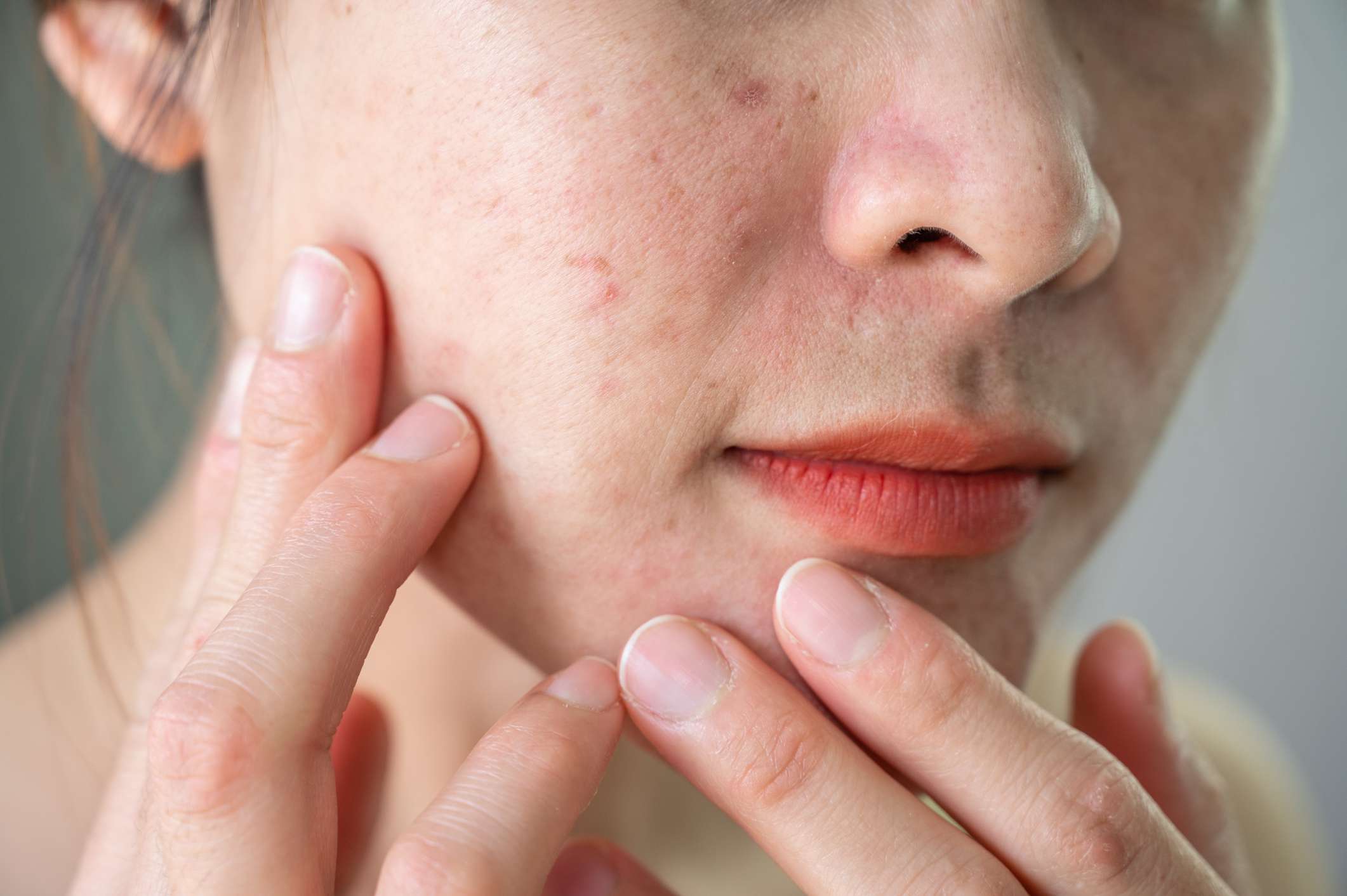
Skincare often focuses on doing more.
More correction.
More renewal.
More stimulation.
But when the skin barrier becomes compromised, the signals are rarely dramatic at first.
They tend to appear as subtle changes — easy to misinterpret, and often treated with the very steps that make them worse.
Understanding these signs early allows the skin to be supported rather than pushed further out of balance.
What the Skin Barrier Actually Does
The barrier is not just the outermost layer of skin.
It is a functional structure made of corneocytes (skin cells) held together by lipids — primarily ceramides, cholesterol, and fatty acids — forming what is often described as a “brick and mortar” system.
When intact, this structure:
- Regulates water retention
- Limits irritation penetration
- Maintains resilience against environmental stress
- Allows skin to respond predictably to products
When disrupted, skin becomes reactive not because it is sensitive by nature — but because its protective function has been reduced.
Common Signs Your Skin Barrier Is Compromised

Barrier damage rarely shows up as a single obvious symptom.
It is usually a pattern.
1. Products Suddenly Start Stinging
Skincare you previously tolerated begins to burn, tingle, or feel uncomfortable — even gentle formulas.
This is one of the earliest indicators that the barrier is no longer buffering penetration effectively.
2. Persistent Tightness (Even With Moisturizer)
Skin feels dry and taut shortly after cleansing or moisturizing, not because it lacks oil, but because it cannot retain water efficiently.
3. Increased Redness or Patchy Irritation
Inflammation appears more easily and takes longer to settle.
This can resemble sensitivity but is often structural rather than inherent.
4. Breakouts That Don’t Behave Normally
Barrier disruption can trigger irregular breakouts — not classic acne, but scattered inflammation or congestion that responds poorly to typical treatments.
5. A Shiny, Over-Exfoliated Appearance
Skin may look overly smooth or reflective, sometimes described as “glass-like,” while actually being thinned and vulnerable.
6. Skincare Stops Working the Way It Used To
Actives that once gave predictable results now feel ineffective or aggravating.
This inconsistency is a hallmark of barrier instability.
What Commonly Leads to Barrier Damage
In most cases, barrier disruption is cumulative rather than caused by a single mistake.
Frequent contributors include:
- Over-exfoliation (chemical or physical)
- Layering too many active ingredients
- Cleansing aggressively or too often
- Attempting to “treat” every fluctuation in the skin
- Environmental stress combined with insufficient recovery
Barrier damage is rarely about neglect.
More often, it is the result of well-intentioned overcorrection.
What Helps the Skin Recover
Repair is less about adding treatments and more about removing interference.
This usually means:
- Simplifying routines temporarily
- Prioritizing lipid-replenishing ingredients (like ceramides)
- Supporting hydration without overstimulation
- Allowing consistency to replace intensity
The skin does not need to be forced back into balance.
It needs the conditions that allow it to rebuild.
How Long Barrier Recovery Takes
When supported appropriately, the barrier can begin stabilizing within weeks, though full normalization varies depending on the degree of disruption.
Progress is often gradual:
less reactivity first,
then improved hydration retention,
then more predictable behavior overall.
Examples of Barrier-Supportive Products
These examples reflect formulations designed to reinforce the skin barrier rather than stimulate rapid change.
- CeraVe Moisturizing Cream — Contains ceramides and cholesterol to support lipid replenishment.
- La Roche-Posay Toleriane Double Repair Moisturizer — Focused on barrier hydration with minimal irritation risk.
- Skinfix Barrier+ Triple Lipid Cream — Designed to restore compromised skin with a balanced lipid profile.
- Avene Cicalfate Restorative Protective Cream — Often used when skin needs a reduced-intervention approach.
The goal is not to introduce multiple new products, but to choose one supportive formula and allow consistency to do the work.
Continue Reading
If you’re working to restore barrier function, these may help you understand the structural side of repair:
→ Ceramides for Skin: Why They Matter for Barrier Repair
→ Niacinamide for Skin: Benefits, How to Use It
Healthy skin is rarely repaired through intensity, but through restoring the systems designed to protect it.
Leave a Reply