Modern skincare often encourages constant correction: exfoliate, resurface, brighten, renew.
But skin is not designed to be pushed every day. It is designed to defend, regulate, and repair itself when conditions allow.
When too many active ingredients are layered or used too frequently, the result is often confusion — skin that suddenly feels reactive, tight, or unpredictable, even when you’re using products that once worked well.
Understanding why this happens is the first step in restoring balance.
What Counts as an “Active”?
In skincare, actives are ingredients intended to stimulate change in the skin.
They are not inherently harmful — in fact, they can be extremely helpful when used appropriately.
Common examples include:
- Alpha hydroxy acids (AHAs) like glycolic or lactic acid
- Beta hydroxy acid (salicylic acid)
- Retinoids (retinol, retinal, tretinoin)
- High-percentage vitamin C
- Benzoyl peroxide
- Enzyme exfoliants or resurfacing treatments
These ingredients accelerate processes like exfoliation, cell turnover, or pigment correction.
But acceleration without recovery time places stress on the skin barrier.
What Happens When Skin Is Stimulated Too Often
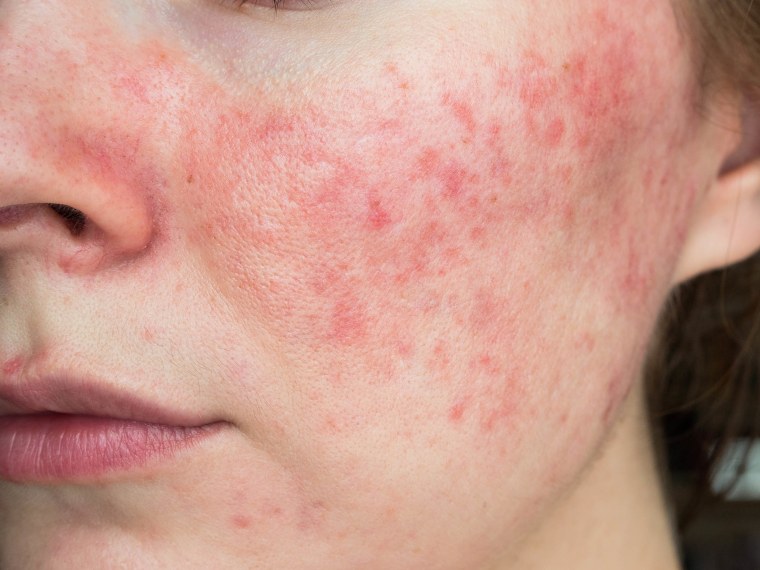
When actives are layered, rotated, or used daily without pause, the skin can enter a state of chronic micro-injury.
Instead of adapting, it begins to lose its ability to regulate itself.
You may notice:
- Tightness even after moisturizing
- Stinging when applying products that once felt gentle
- Breakouts and flaking at the same time
- A shiny appearance that still feels dehydrated
- Skin becoming “sensitive” seemingly overnight
This is not the skin “failing.”
It is the skin signaling overload.
The Barrier Can’t Keep Up With the Pace of Correction
The outermost layer of skin relies on a structured matrix of lipids, proteins, and water-binding compounds.
Actives increase turnover, but the barrier needs time to rebuild those structures.
When stimulation outpaces repair:
- Lipid production becomes inconsistent
- Water escapes more easily (transepidermal water loss increases)
- Inflammation remains slightly elevated
- Nerve endings become more reactive
This creates the paradox many people experience:
Skin looks oily, but feels dry.
Products seem to stop working.
Adding more only worsens the cycle.
If your skin already feels reactive or uncomfortable, shifting into a recovery-focused routine can help calm this cycle.
Why This Isn’t “Purging”
There’s a common belief that discomfort or breakouts after using actives is simply part of the process.
True purging:
- Happens temporarily
- Resolves as skin adjusts
- Does not cause persistent burning or sensitivity
Barrier disruption, by contrast:
- Worsens with continued use
- Makes skin reactive to nearly everything
- Requires reduction, not persistence
The solution is rarely another treatment.
It’s removing pressure.
How to Tell You’ve Crossed the Line

You may need to scale back if:
- You’re using multiple actives in one routine
- You feel compelled to “treat” skin daily
- Your routine changes frequently
- Skin feels unpredictable rather than stable
- Hydration never seems to last
Many of these changes overlap with the early signs of a compromised barrier.
Healthy skin trends toward consistency.
Overstimulated skin trends toward volatility.
How to Fix It: Remove the Trigger, Then Support
Recovery is less about what you add and more about what you pause.
Simplifying your routine allows the skin to return to predictable function.
Step 1 — Stop Non-Essential Actives (Temporarily)
Give skin 2–4 weeks without exfoliating acids, retinoids, or aggressive treatments.
Step 2 — Focus on Gentle Cleansing and Hydration
Use products that maintain moisture and lipid balance rather than stimulating change.
Step 3 — Keep the Routine Predictable
Consistency allows enzymatic repair processes to normalize.
Step 4 — Wait for Signals of Stability
You’ll notice:
- Less stinging
- Hydration lasting longer
- More even texture
- Reduced reactivity
Only then should actives be reintroduced — slowly and intentionally.
Barrier repair depends on hydration, lipid balance, and signaling support — not just one ingredient.
More Isn’t Always Better — Especially With Skin
The idea that improvement requires constant action is deeply ingrained in modern skincare culture.
But skin is not improved through pressure. It’s improved through conditions that allow it to function normally again.
In many cases, progress begins when stimulation stops.
Final Thoughts
Active ingredients are tools, not requirements.
Used thoughtfully, they can support meaningful change. Used continuously, they can disrupt the very systems they’re meant to improve.
If your skin feels like it’s working harder than it used to, it may not need another product.
It may need less interference — and time to recalibrate.
Leave a Reply