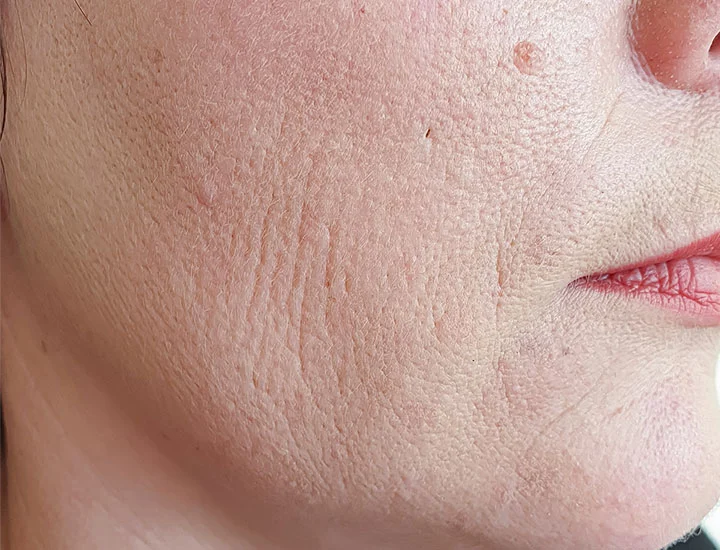
Skin that feels tight, dull, or suddenly reactive is often described as “dry.”
But dryness and dehydration are not the same condition — and treating them as if they are can prolong the imbalance.
Understanding the difference allows you to respond to what the skin is actually lacking, rather than adding heavier products that may not address the cause.
Dry vs. Dehydrated: What’s the Difference?
Dry skin is a skin type.
It produces less oil (lipids) naturally and often requires richer emollients to reinforce the barrier.
Dehydrated skin is a condition.
It lacks water, not oil — and it can happen to any skin type, including oily or acne-prone skin.
When skin is dehydrated, its ability to retain moisture is compromised, often due to barrier disruption, over-exfoliation, or environmental stress.
Signs Your Skin Is Dehydrated

Dehydration often appears as subtle changes rather than obvious flaking.
You may notice:
- Tightness even after moisturizing
- A dull or tired appearance
- Fine surface lines that disappear when hydrated
- Increased sensitivity to products
- Skin that feels oily yet still uncomfortable
- Makeup sitting unevenly or looking flat
These are signs that water is escaping faster than the skin can retain it — a process known as transepidermal water loss (TEWL).
Why Dehydration Happens
Dehydration is frequently linked to disruption of the skin barrier rather than a lack of moisturizer.
Common contributors include:
- Over-exfoliation or frequent active use
- Cleansers that strip protective lipids
- Environmental changes (cold air, indoor heating, travel)
- Inconsistent routines
- Attempting to “treat” the skin too often
If this pattern sounds familiar, it often overlaps with what’s discussed in Signs Your Skin Barrier Is Damaged.
Why Heavier Products Don’t Always Fix It
When skin feels tight, the instinct is often to apply thicker creams.
But dehydration is not solved by adding more oil — it requires restoring the skin’s ability to bind and hold water.
Without that function, heavier products can sit on the surface without improving comfort.
This is why focusing on barrier-supportive ingredients — like those discussed in Ceramides for Skin — is often more effective than simply switching moisturizers.
What Helps Rehydrate the Skin

Instead of adding more steps, rehydration is usually supported by simplifying:
- Use a gentle cleanser that does not leave skin feeling stripped
- Apply humectant-rich hydration (glycerin, hyaluronic acid, panthenol)
- Seal with a barrier-supportive moisturizer
- Reduce exfoliation temporarily
- Maintain consistency rather than switching products frequently
The goal is to allow the skin to restore its water balance, not force rapid change.
How Long It Takes to See Improvement
Because hydration is tied to barrier recovery, improvement tends to be gradual.
Within a few weeks, many people notice:
- Less tightness
- Improved texture
- More predictable response to products
- A return of natural luminosity
This reflects restored function rather than temporary surface hydration.
A Simpler Way to Think About Hydration
Hydrated skin is not created by layering more products.
It comes from supporting the structures that allow water to remain where it’s needed.
When the barrier is intact, hydration becomes easier to maintain — and requires less effort overall.
Continue Reading
If dehydration developed after over-treating your skin, you may find these helpful:
→ Over-Exfoliation: How to Recover and Repair Your Skin Barrier
→ Minimalist Skincare Routine: What Actually Matters
Healthy skin does not just need moisture added.
It needs the ability to hold onto it.
Leave a Reply